
Short answer
Microbiological quality for a cosmetic dissolvable microneedle patch starts with a product-specific risk assessment. Map the water-containing steps, the dry patch, the package and foreseeable use before selecting tests. A sealed, single-use format does not automatically make a patch sterile or exempt it from microbial controls. A preservative challenge test is likewise not a universal substitute for controlling raw materials and manufacturing hygiene.
Where contamination can enter the process
A typical casting route exposes polymer and cosmetic-active solutions to water, mixing vessels, dispensing equipment, molds and drying air before the patch reaches its primary pouch. The FDA’s microbiological-safety overview identifies contaminated raw materials or water, poor manufacturing conditions, weak preservation and unsuitable packaging among routes by which cosmetics can become contaminated. A microbiology plan should follow the actual process map and include intermediate sampling where it can locate a problem.
For a proposed patch, ask where liquid material waits, whether a mold is reused, how it is cleaned and dried, how long an array remains open after drying, and what happens if a pouch seal fails. Record the sample point and lot identity for each check. A clean result at the end of one run does not explain where a deviation entered another run.
Separate the standards by the question they answer
Finished-product limits
ISO 17516:2014 addresses microbiological limits for cosmetics and says that products assessed as microbiologically low risk need not necessarily undergo microbiological testing. The standard does not declare every dry patch low risk. The product and market team must document why the proposed formula, process, package and use conditions support the chosen testing approach. Check the standard’s current edition when a specification is approved.
Low-risk assessment
ISO 29621:2017 gives guidance for identifying finished cosmetics that present a low risk of microbial contamination during production or intended use. A low water-content result is one input, not the entire assessment. Consider raw-material quality, the wet stage, exposure time, single-use packaging and the consumer’s likely handling of the patch.
Antimicrobial protection
ISO 11930:2019 describes evaluation of antimicrobial protection through a preservation efficacy test, microbiological risk assessment or both. Whether that method is relevant to a particular dry, single-use patch depends on the finished product and its foreseeable use. Do not add a preservative merely to obtain a familiar test result; assess the formulation and its exposure conditions first.
Build controls around the actual patch
- Qualify water, polymer, peptide or other active, and primary packaging against agreed incoming specifications.
- Define cleaning and drying records for mixing equipment, dispensing paths and reusable molds. Include a response to damaged or difficult-to-clean surfaces.
- Set justified hold times for prepared solution, filled molds, dry unsealed arrays and samples waiting for testing.
- Choose in-process and finished-patch sampling points that can locate a problem. Document methods, sample size and how the polymer matrix affects test recovery.
- Verify pouch integrity and storage conditions, then retain traceability from raw-material lots through the finished patch.
The FDA cosmetics GMP inspection checklist calls attention to water testing, raw-material handling, sanitary equipment, in-process controls and laboratory records. It is a useful audit framework, but it does not establish that any named HYTANBIO product or facility has passed a specific audit.
What a CDMO report should say
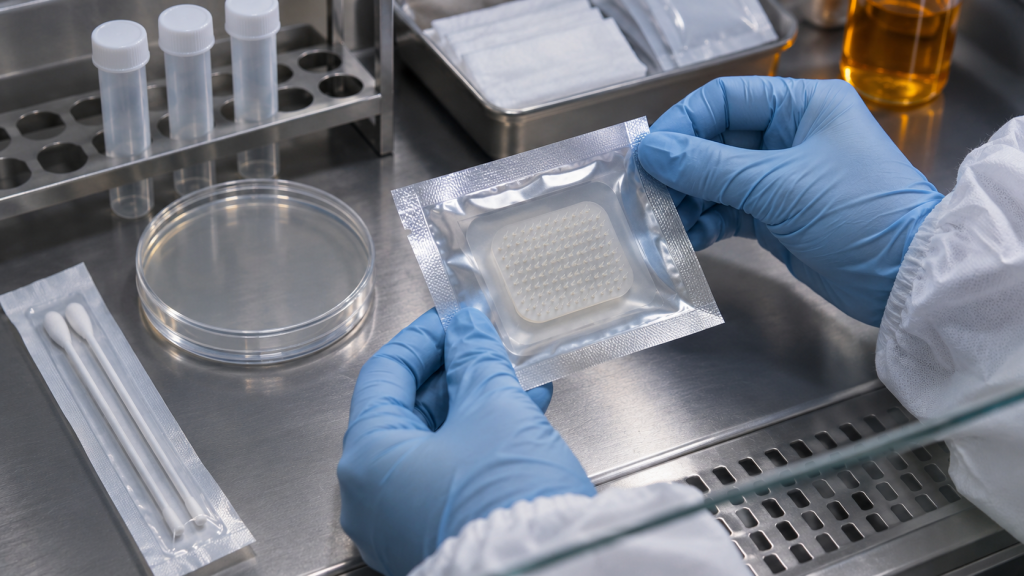
Record the product version, process stage, lot, sampling location, test method, detection limits or recovery information, acceptance rationale and disposition of failures. If the patch is marketed as sterile, that is a separate, demanding claim requiring its own validated process and evidence. Do not infer sterility from a clean-room photograph, a sealed pouch or a routine cosmetic microbial result.
FAQ
Is a dry, individually wrapped patch automatically low microbial risk?
No. Assess the full wet-to-dry process, raw materials, package integrity and foreseeable handling. Document the basis for any low-risk conclusion.
Does a negative finished-product test prove the whole lot is sterile?
No. A routine sample result describes the material and method tested. Sterility requires a separately defined and validated claim.
Should every dissolvable patch contain a preservative?
No universal formula rule applies. Decide from the finished product’s microbiological risk assessment, intended use and applicable market requirements.
Related HYTANBIO resources
References
- ISO 17516:2014, Cosmetics: microbiological limits.
- ISO 29621:2017, microbiologically low-risk cosmetics.
- ISO 11930:2019, antimicrobial protection of a cosmetic product.
- FDA, Microbiological Safety and Cosmetics.
- FDA, cosmetics GMP inspection checklist.
Scope: technical development discussion, not a sterility declaration, product-specific risk assessment or legal conclusion. Apply the standards and market requirements to the actual finished product.