


Technology in one sentence
A dissolvable cosmetic microneedle patch is a coupled system: formula, needle geometry, moisture, drying, backing, package and application conditions must be developed together.

Matrix formation
Polymer choice and solids distribution affect filling, shrinkage, appearance, mechanical behavior and dissolution. A successful beaker formula is not yet a manufacturable array.
Peptide and active protection
Ingredient identity, pH, oxygen, light, shear, hold time, temperature and residual moisture are assessed against the actual process. Protection is formula-specific and should be verified with appropriate methods.
Array mechanics
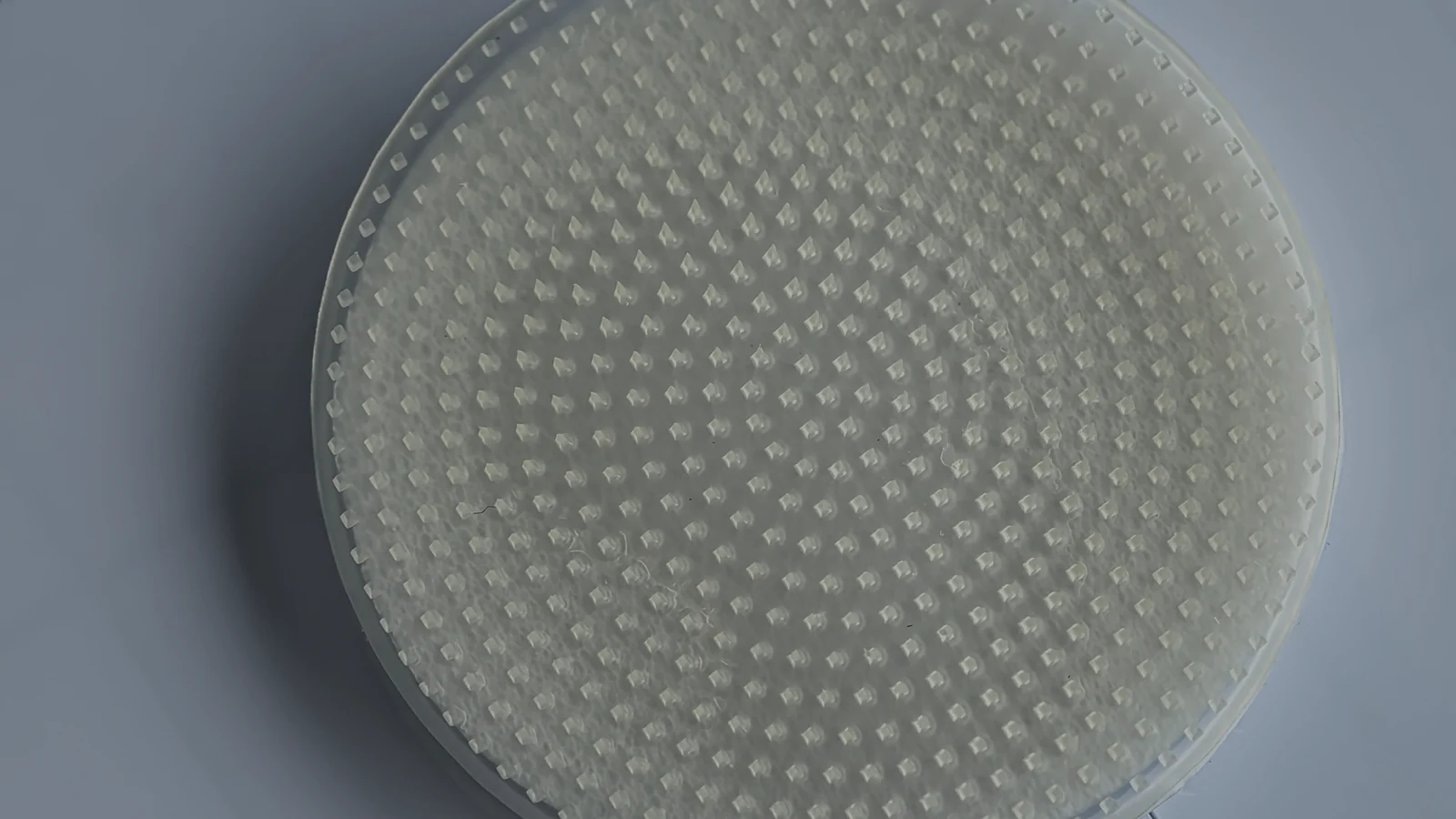
Height alone does not predict performance. Base width, taper, tip geometry, pitch, density, array footprint, backing stiffness and storage humidity all contribute.
Process transfer
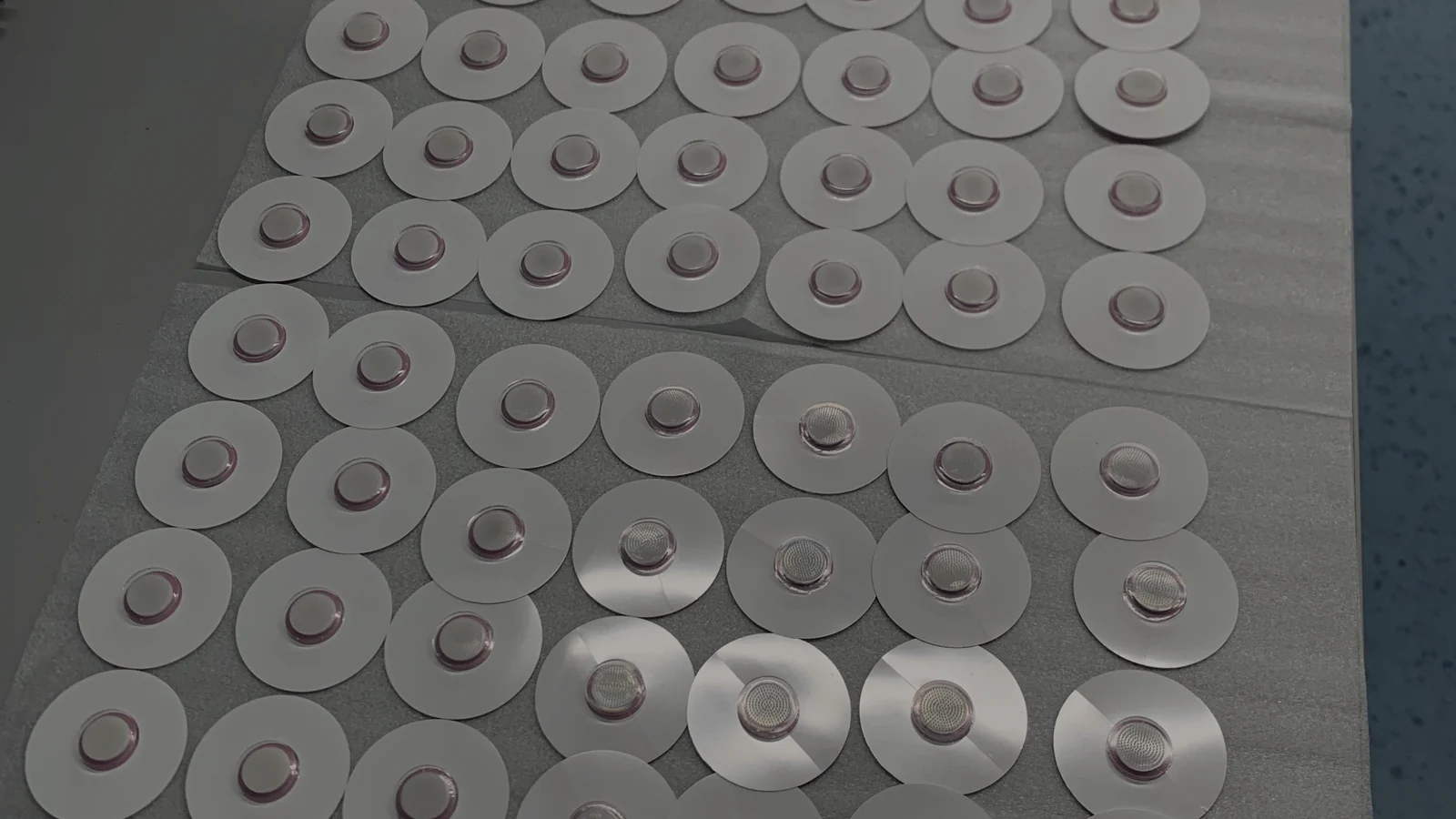
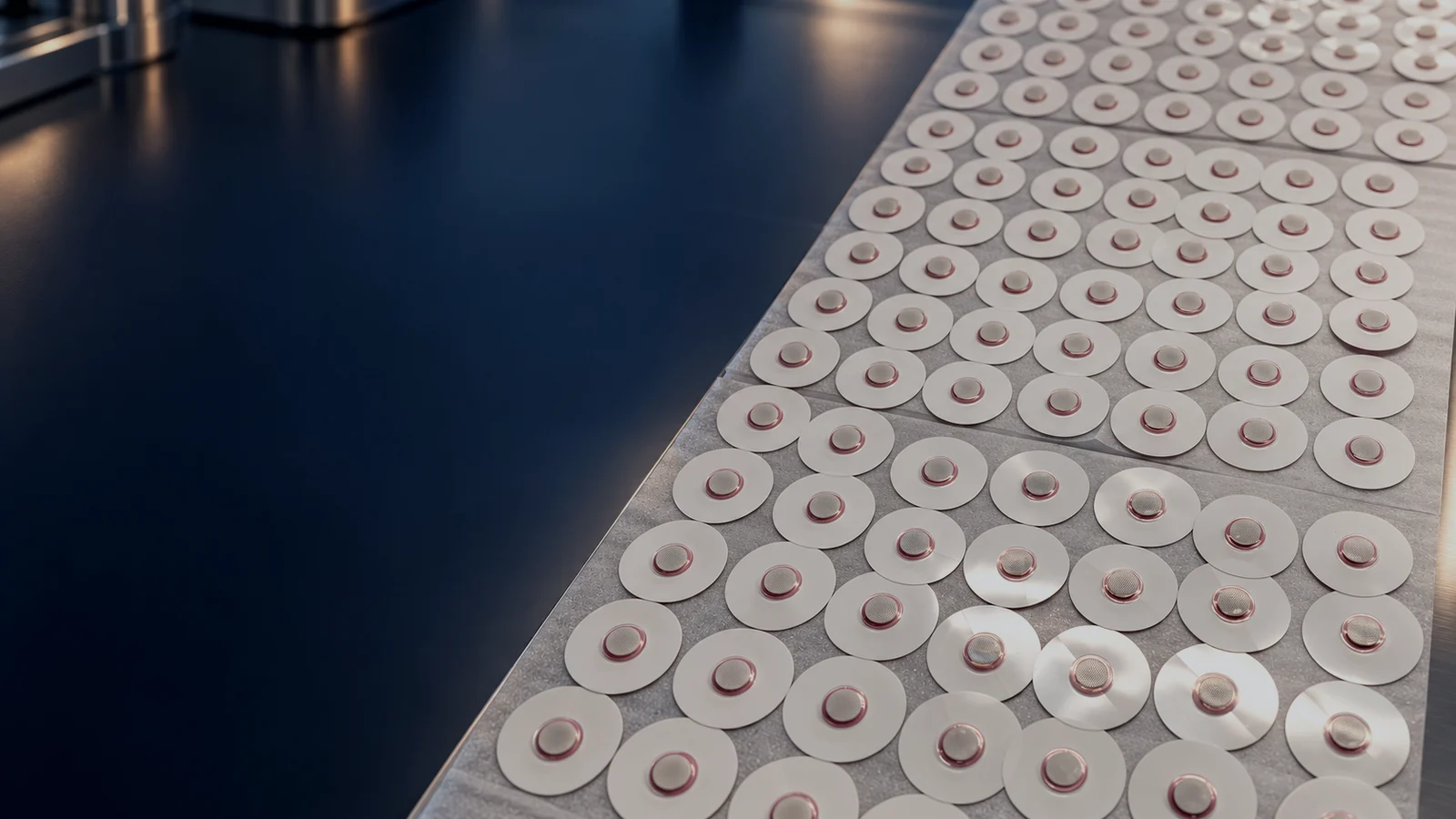
Scale-up controls filling consistency, bubble management, drying uniformity, demolding, inspection, pouch sealing and material traceability. Acceptance limits are agreed before commercial release.
Microneedle process footage
A short view of equipment motion, sheet handling and operator work in microneedle production.
Questions the evidence plan should answer
The method set is selected around the formula, array, package and intended cosmetic claim. These are development categories, not a claim that every project requires the same test.
Morphology & defects
Review tip formation, surface appearance, voids and array consistency against defined visual or imaging criteria.
Mechanical screening
Compare geometry, backing and storage conditions with an agreed mechanical method and acceptance logic.
Dissolution observations
Define the medium, timing, sample condition and endpoint before interpreting dissolution behavior.
Formula & content methods
Link ingredient identity, process exposure and content-related methods to the actual development question.
Microbiological strategy
Set appropriate material, process and finished-product controls according to formula and market needs.
Stability & package fit
Evaluate moisture, light, oxygen, seal and storage risks with the selected primary package.
Explore the product portfolio
View material platforms, product configurations, formulation references and packaging options from HYTANBIO Changzhou Base.