
Technical resources
When Should a Reusable Microneedle Mold Be Retired?
A mold that passed initial inspection can change during use, cleaning and handling. Establish a lifecycle study that follows identified tools and locations over repeated runs, then use the findings to define inspection, repair and retirement decisions.
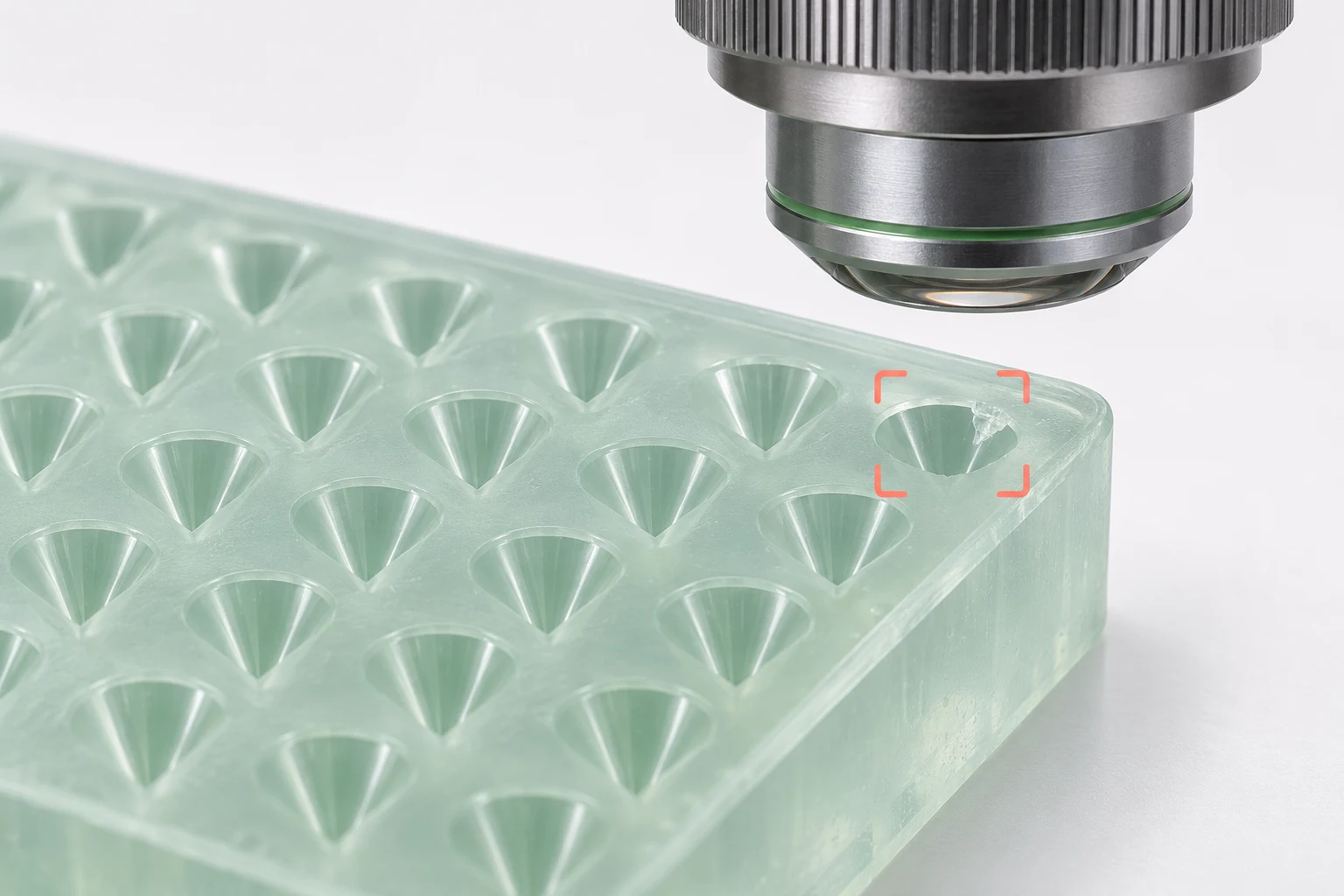
A supplier offers a reusable microneedle mold without a documented retirement rule. The buyer asks for a guaranteed number of cycles. A defensible answer needs a definition of a cycle, the tool’s operating history and observations relevant to the arrays it produces.
Define the unit of tool life
Assign each physical mold an identifier. Distinguish it from the master design, duplicate tools and replaceable components. Record what counts as a use cycle, including whether an aborted fill or repeated demolding attempt counts. A label saying used ten times is ambiguous when unsuccessful runs are omitted.
The FDA cosmetic GMP checklist addresses equipment maintenance, cleanliness and suitable contact surfaces. It does not establish a reusable microneedle mold’s cycle life. The lifecycle plan below is a proposed development exercise for the actual tool and process.
Follow locations through repeated use
Choose identifiable tool locations for repeated observation and preserve their relationship to the resulting arrays. Record the starting condition and subsequent observations under a consistent inspection approach. Keep edge and central regions visible when location is relevant to the question.
Separate the physical mold from the arrays produced by it. An apparent change in an array can prompt tool inspection, but it does not establish tool wear as the cause. Compare process records, material revisions and any other changes made during the same period.
Include cleaning and abnormal events
A lifecycle record should capture cleaning, maintenance, repairs and handling incidents as well as successful production runs. If the approved cleaning procedure changes, preserve the date and the tools affected. A cycle count that ignores these events may compare tools with substantially different histories.
| Event | Record to retain |
|---|---|
| Routine use | Tool ID, run reference and cycle definition |
| Maintenance or cleaning change | Procedure revision and inspection afterward |
| Repair | Affected location, intervention and requalification decision |
| Unusual handling | Observed condition and authorized next action |
Do not reset the original lifetime counter when a tool is repaired. Add a repair event and, if useful, a separate counter since repair. The original history remains relevant to the retirement decision.
Distinguish measurement variation from change
Repeated inspection can itself vary by reviewer, setup or image acquisition. NIST’s gauge-study guidance identifies repeatability and reproducibility as measurement-system questions. Establish sufficient consistency to interpret a trend before treating every changed observation as physical wear.
Use independently identified tools where the project needs a conclusion about a class of molds. Repeatedly inspecting one tool can describe that tool’s history, but it leaves uncertainty about variation between tools. State that limitation when only one prototype mold is available.
Make the retirement rule actionable
The final rule can combine an evidence-supported use boundary with condition-based inspection and event-triggered review. Specify who can stop use, what requires investigation and whether a repair can be evaluated. Keep any numeric boundary tied to the studied tool material, process and cleaning conditions.
A mold may need retirement because of an identified defect before its planned count is reached. Conversely, extending use beyond a studied boundary requires an authorized assessment. A purchase-price calculation should include replacement assumptions without turning them into a technical guarantee.
The existing mold fidelity guide addresses initial specification and inspection. Add lifecycle records to the manufacturing and characterization discussion when tools are intended for repeated use.
Questions and answers
Should an aborted molding attempt count toward tool use?
Define the counting rule according to the exposure and handling the tool experienced. Record aborted attempts even if the lifecycle metric treats them separately. Omitting them entirely makes the history incomplete.
Can a repaired mold's lifetime counter restart at zero?
Preserve the original cumulative history. A separate since-repair counter can be useful, but it should remain linked to the repair and assessment records. Repair does not erase prior exposure or previous observations.
Does a new array defect prove that the mold is worn?
No. Inspect the relevant tool location and review other changes in material, processing and inspection. Keep the observation separate from the causal conclusion until the evidence supports an attribution.
How much can one prototype mold establish about production tool life?
It can document that tool’s observed behavior under the studied conditions. It provides limited information about variation between independently made tools. State that limitation and plan broader evidence when the decision requires it.
Can a mold remain in use merely because it has not reached its cycle limit?
A count does not override a condition requiring review. Follow the defined stop-use and inspection rules when damage or an unusual event occurs, even when the recorded cycle count remains below the planned boundary.